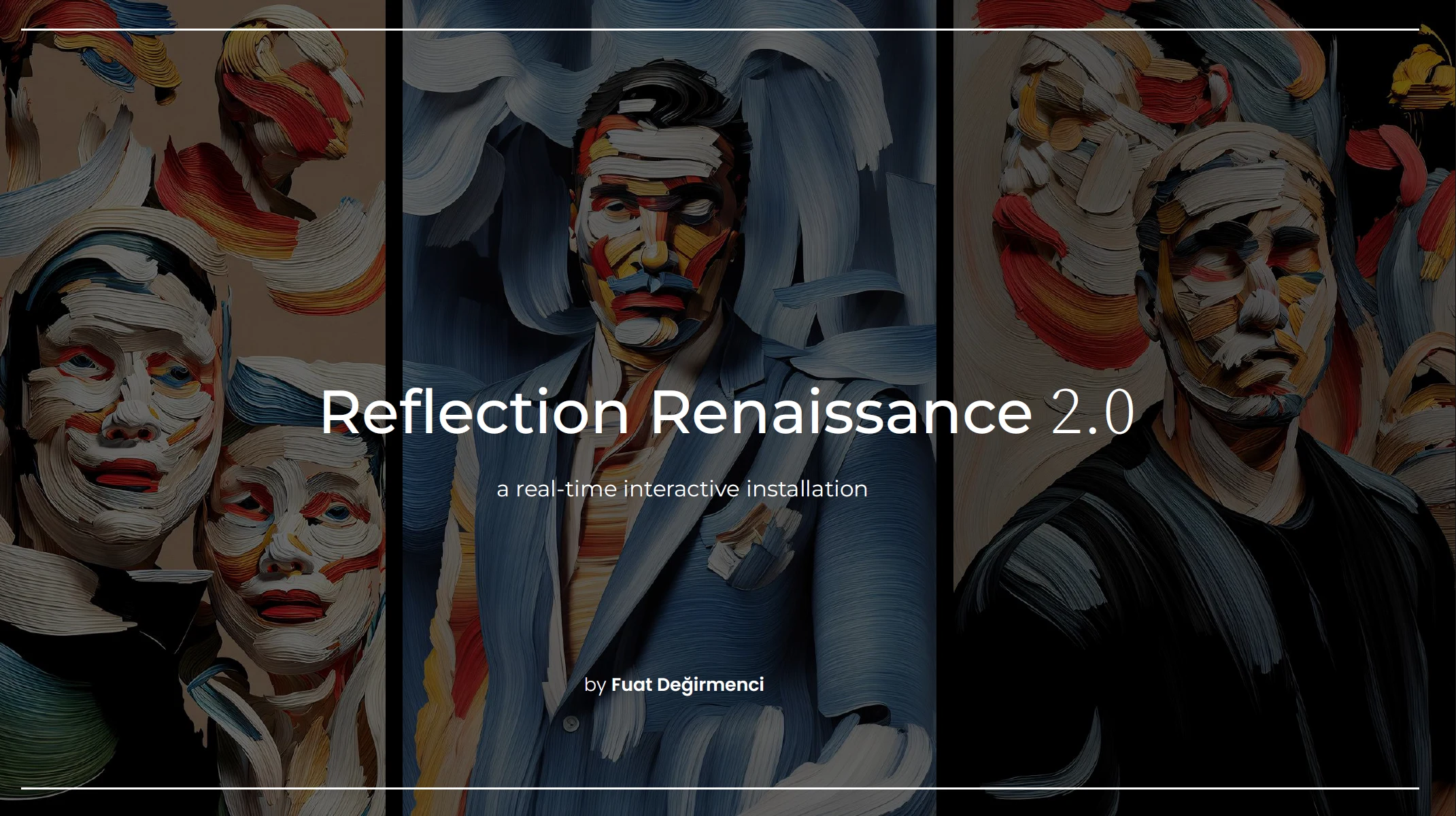
Reflection Renaissance 2.0
by Fuat Değirmenci
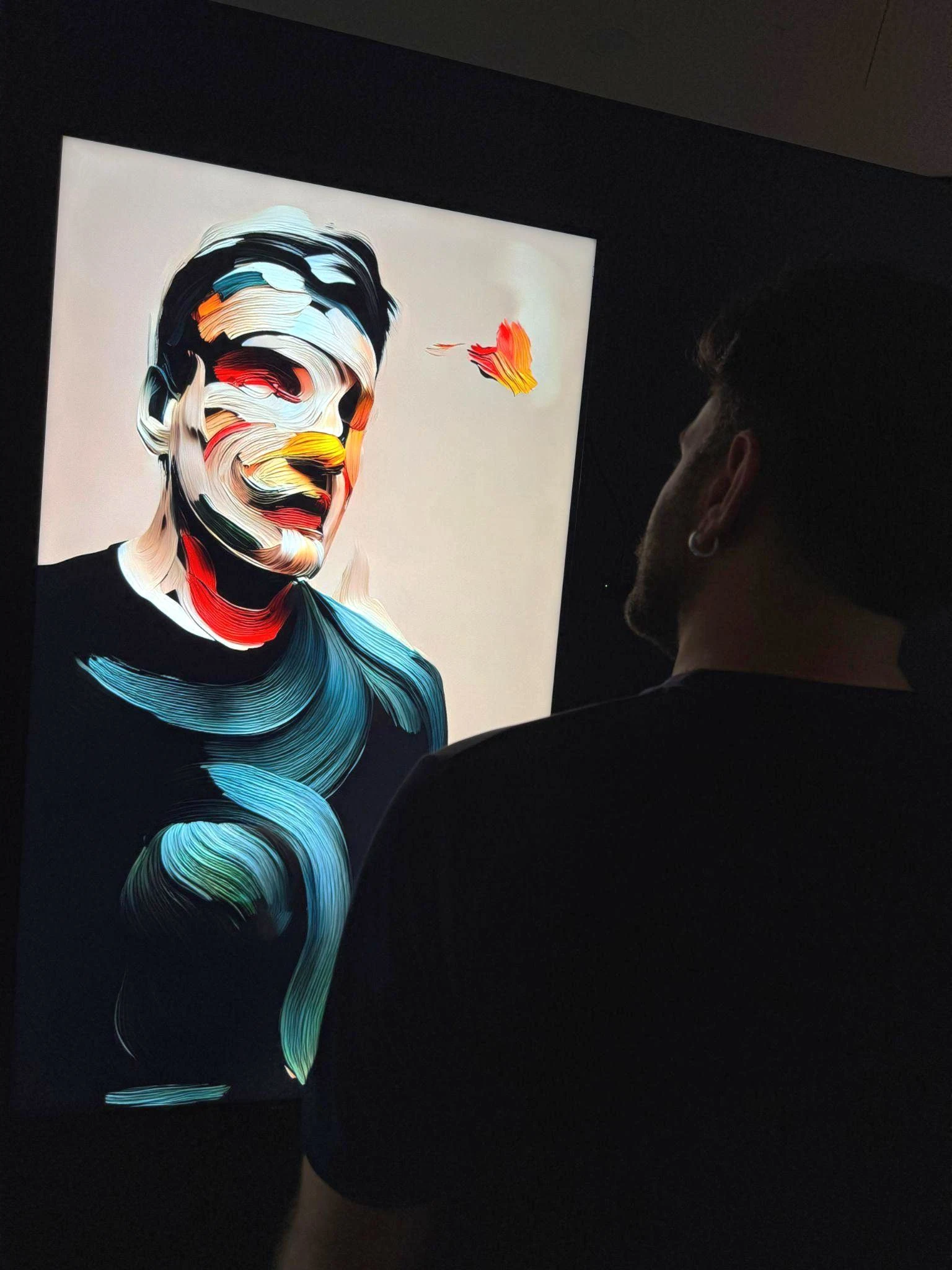
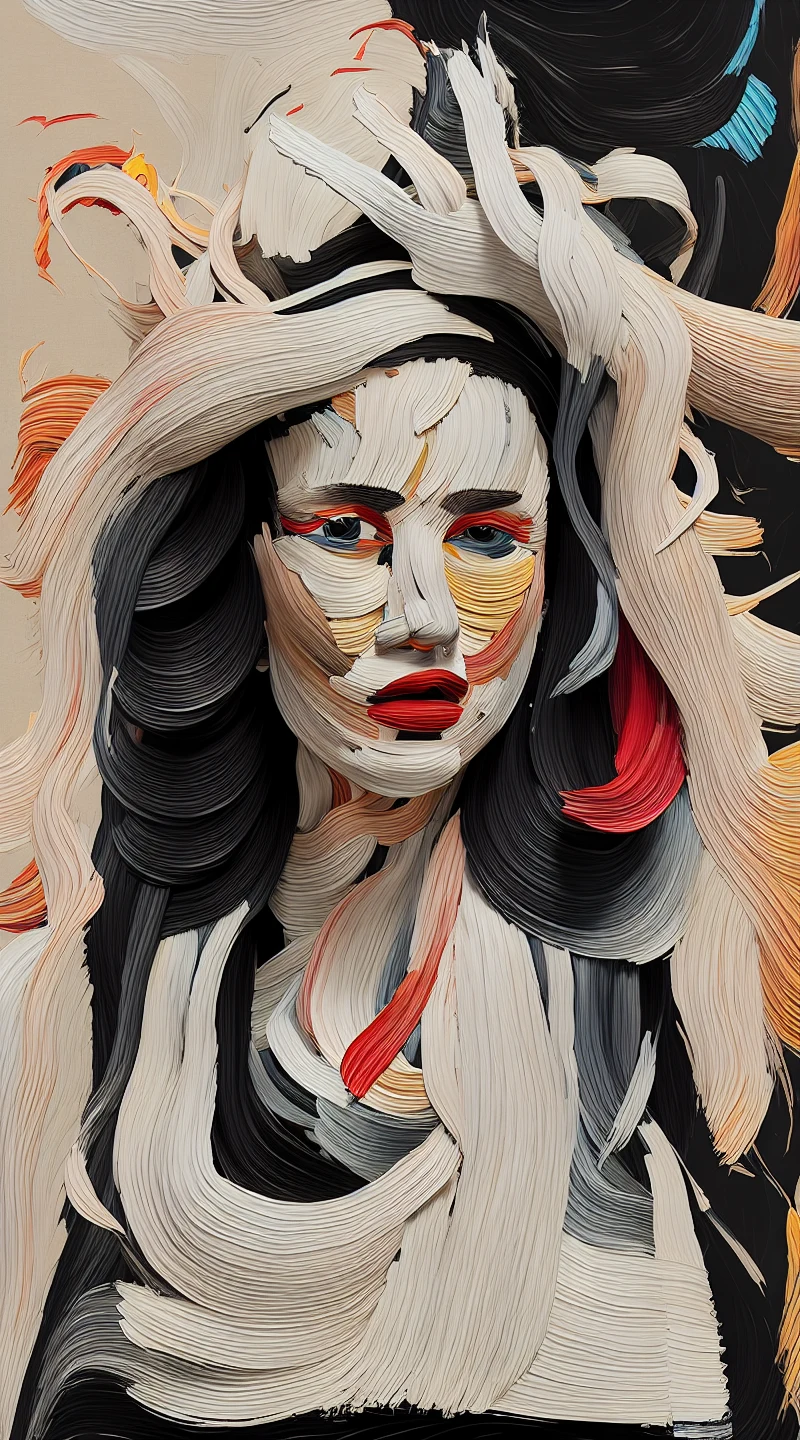
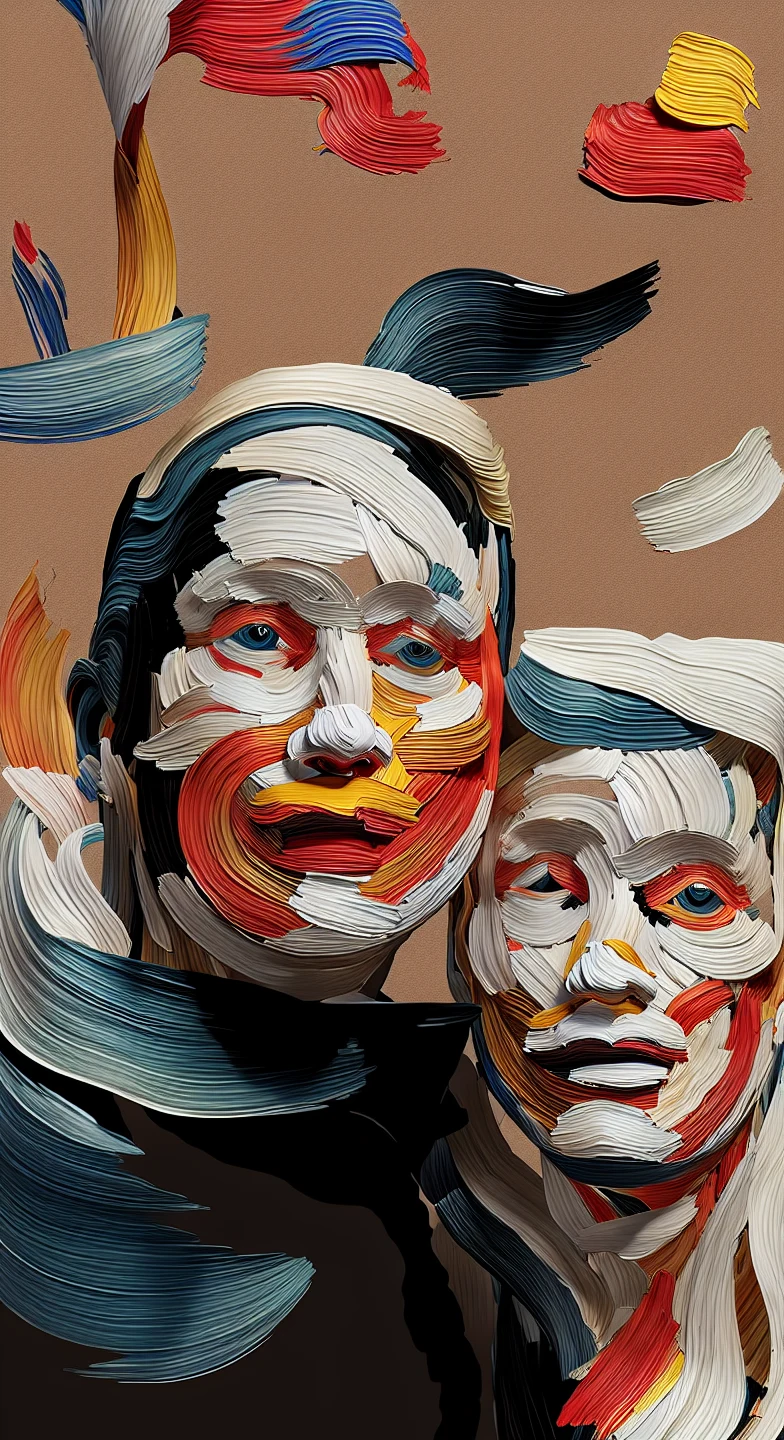
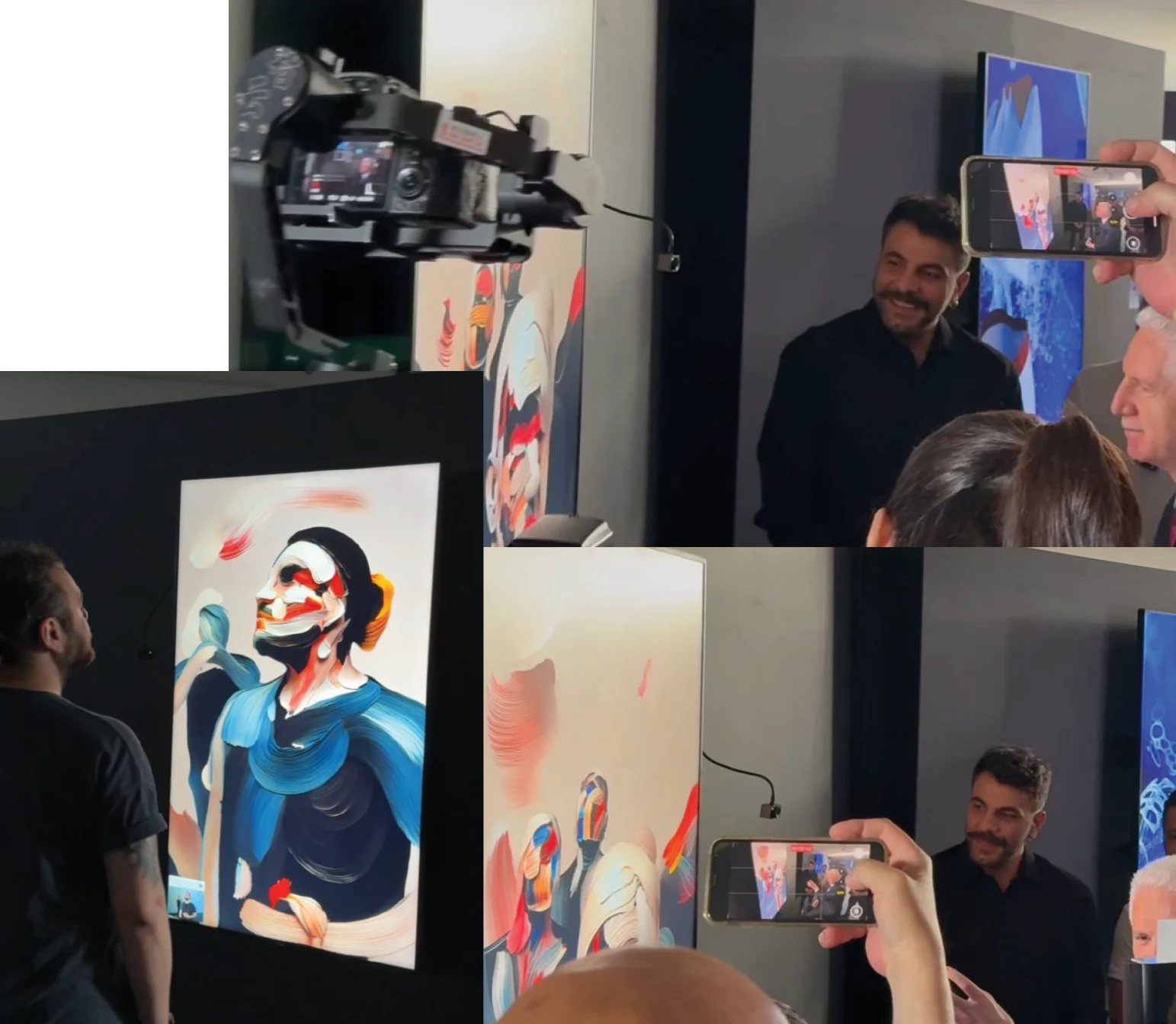
Reflection Renaissance 2.0 is an interactive installation that explores how physical bodies are reconstructed in digital space. As visitors stand before the screen, they see a real-time transformation of their own silhouette—reimagined through a custom AI model. Everyday objects you have with you at the exhibition (a hat, a bag, a book...) become tools that trigger the transformation of this digital identity. Every pose, every gesture, every object reshapes the reflection on the screen. Thus, each visitor uses their own body to create a temporary, personal and unique digital figure. Reflection Renaissance 2.0 translates the classical understanding of portraiture into a contemporary language. It reopens the discussion of identity, representation and perception through the lens of artificial intelligence. And it asks: What does our body look like in today's mirror?
Concept
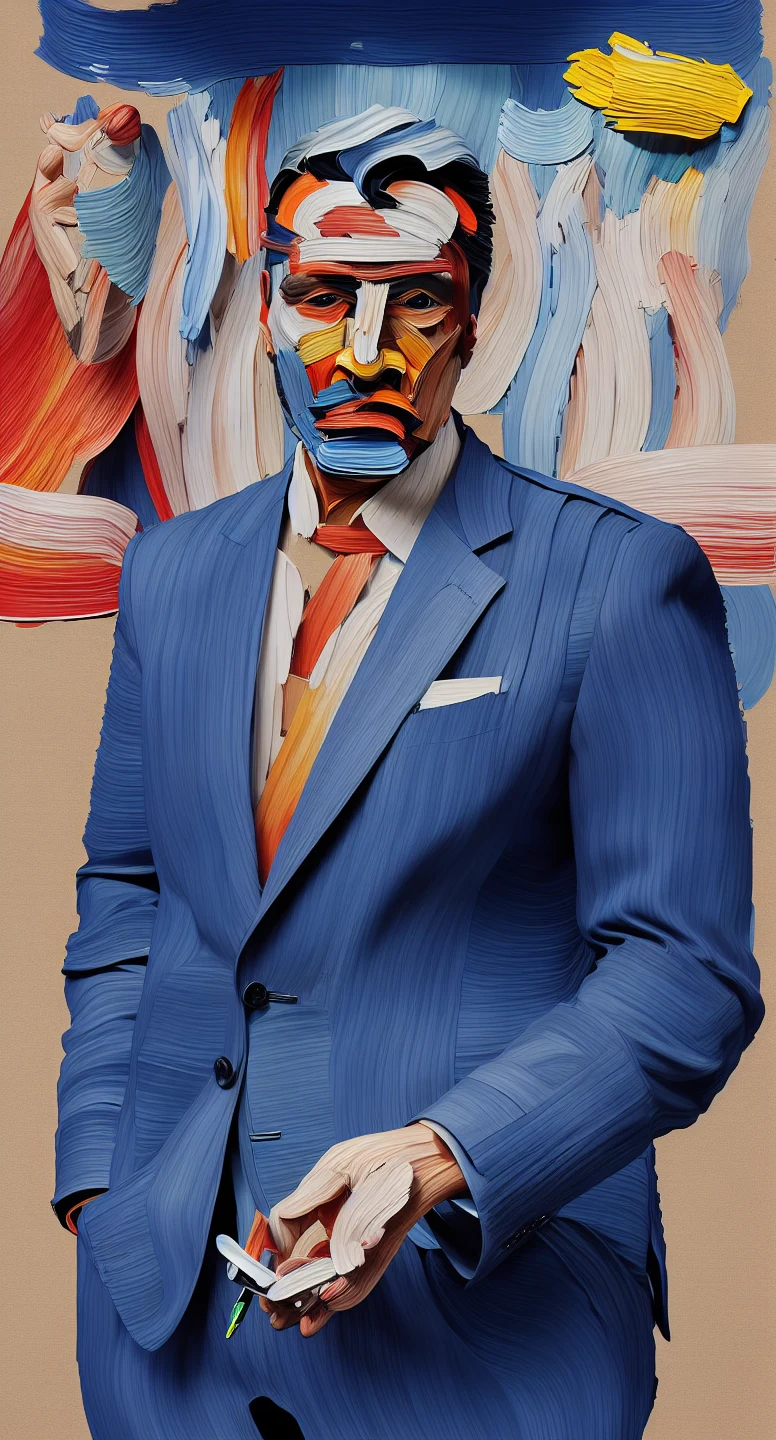
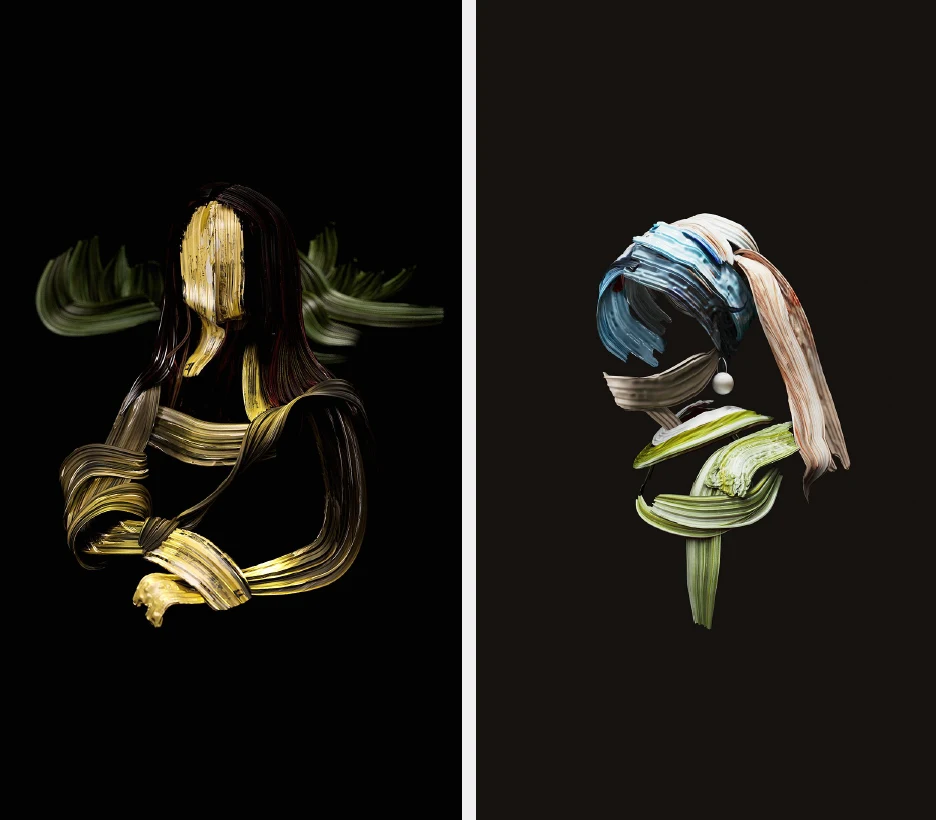
During the Renaissance, artists gained the freedom to explore their inner worlds, shifting from a religion-centered worldview to a human-centered understanding of art. The Renaissance, meaning rebirth, marked a new way of seeing and representing the human figure. Reflection Renaissance 2.0 revisits this historical moment through a contemporary lens. Inspired by the visual language of Renaissance painting, the project does not seek to replicate classical works, but to reinterpret their essence by reducing form, color, and composition to their core elements. Through digital purification, detailed and realistic imagery is transformed into simplified structures that emphasize relationships between line, light, perspective, and color—echoing traditional painterly gestures in a minimal form. As a further act of rebirth, these works were used to train an AI-supported, machine-learning model. The project reaches its current form as a real-time interactive installation, allowing Renaissance imagery to be continuously reinterpreted and experienced in the present moment.
Technology
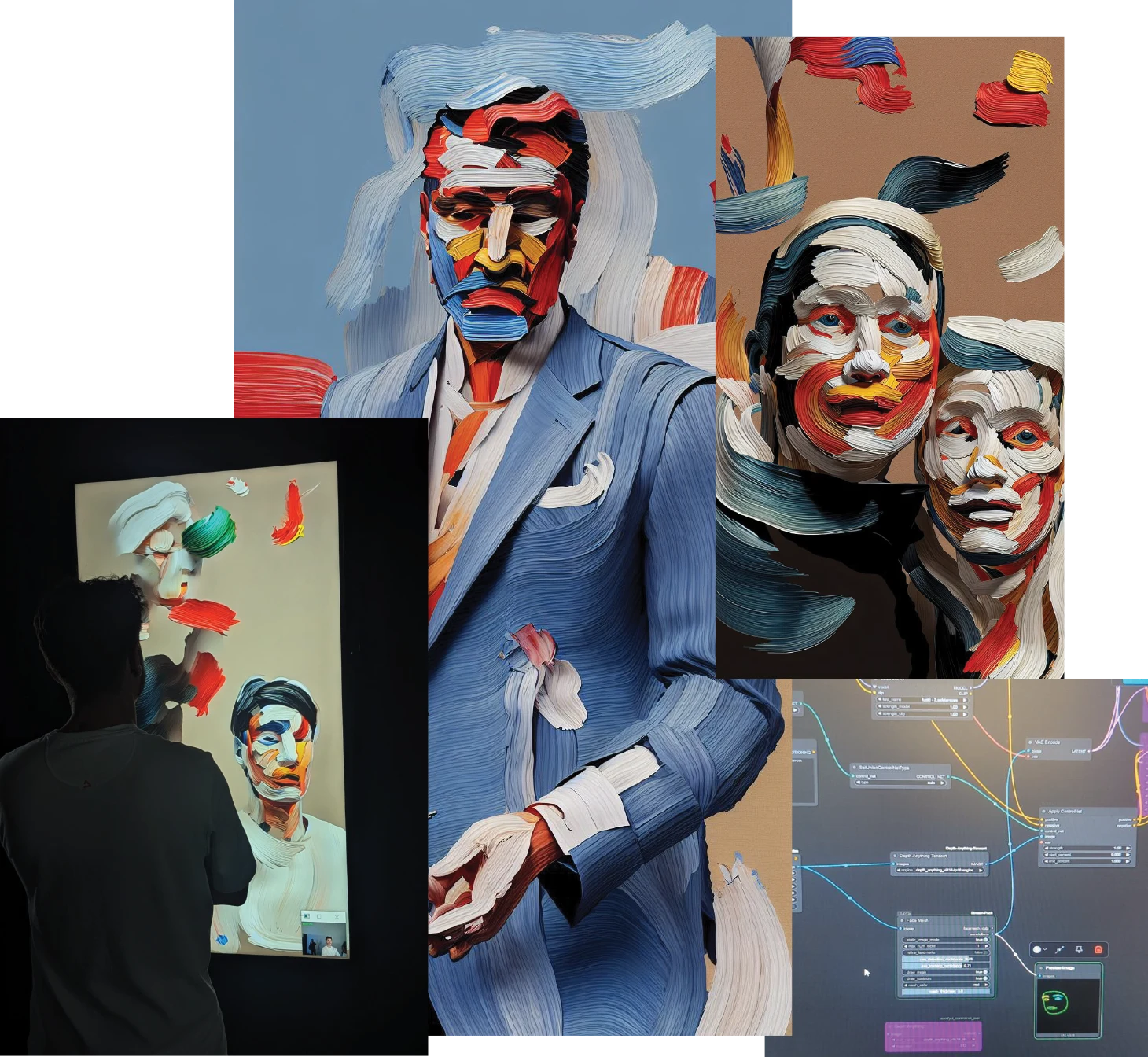
Reflection Renaissance 2.0 is built on a special artificial intelligence model trained with the artist's own visual productions. This Stable Diffusion-based system reproduces and transforms the artist's aesthetic language through machine learning. Developed using the ComfyUI infrastructure, the system operates offline and in real time within the exhibition space. Each visitor who steps in front of the camera becomes part of an algorithmic interpretation process, with their body and movements instantly converted into visual input. The resulting images are not pre-generated; each is unique to that moment, irreproducible, and a temporary digital portrait.
Experience
Step 1: Interaction As the visitor steps in front of the installation, the system is activated. A camera integrated into the screen perceives the visitor’s body in real time, marking the starting point of the experience. At this moment, the visitor is no longer a passive observer, but becomes an active participant whose presence initiates the visual process.
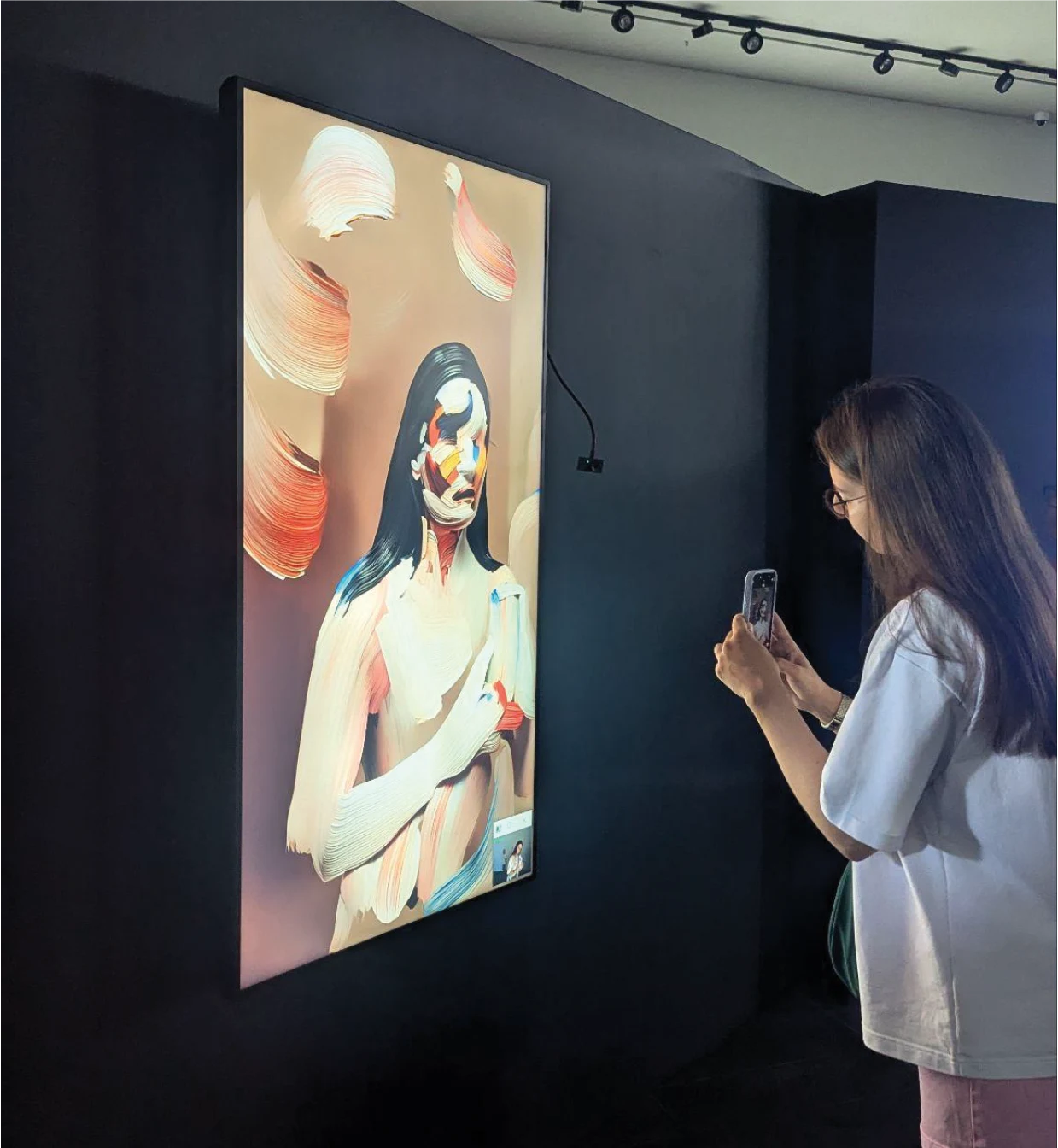
Step 2:Transformation Everyday objects within the exhibition space—such as a hat, a bag, or a book—become active elements that trigger the transformation of the digital identity. Each pose, gesture, and object continuously reshapes the on-screen representation in real time. The body is no longer fixed; it is constantly reinterpreted through the interaction between the visitor and the algorithm.
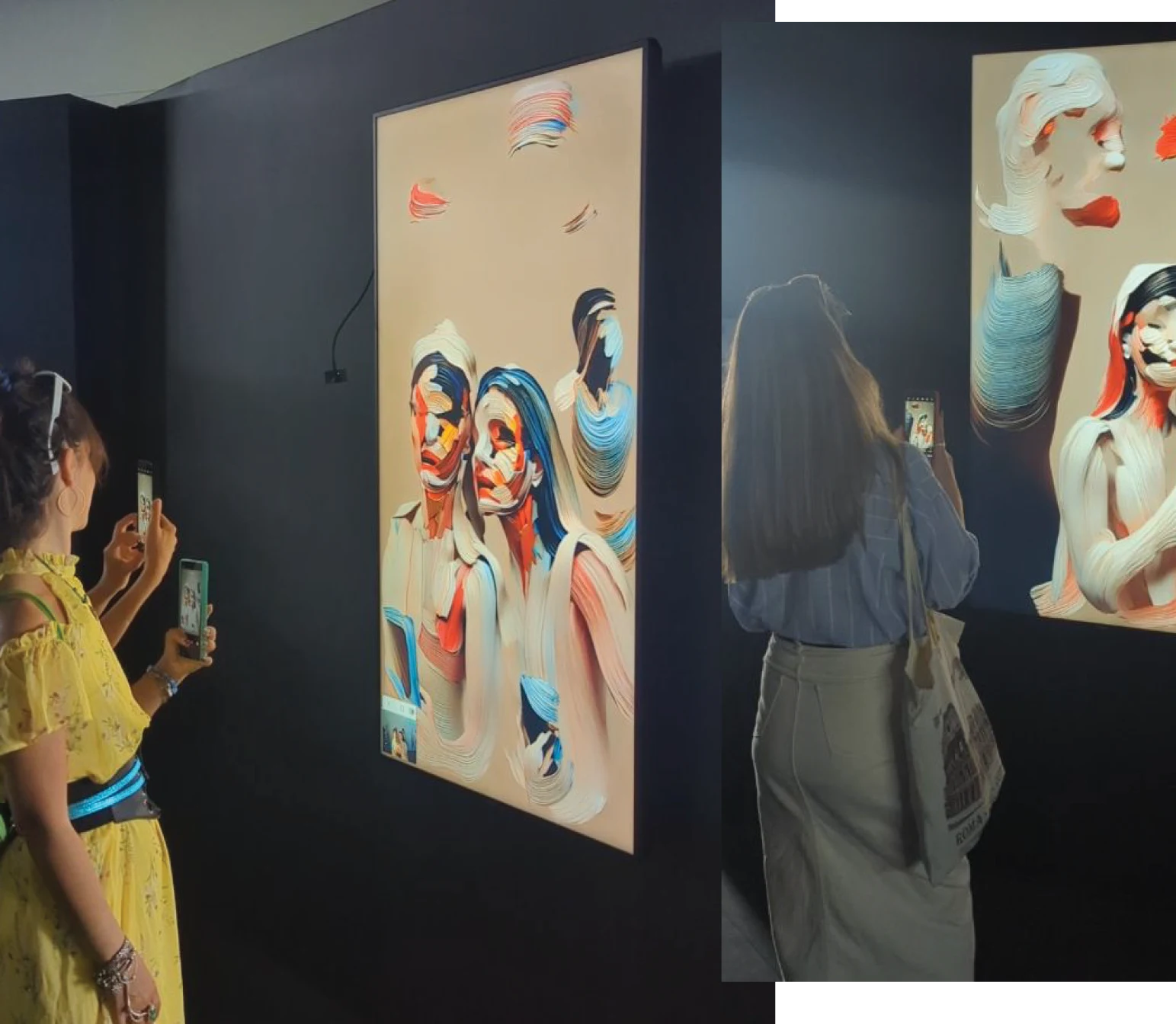
Step 3: Creation As a result of this interaction, each visitor uses their body and movements as a canvas to generate a temporary, personal, and entirely unique digital figure. The outcome is not a recorded image, but a momentary creation—formed through the collaboration between the visitor’s presence and the algorithmic process.
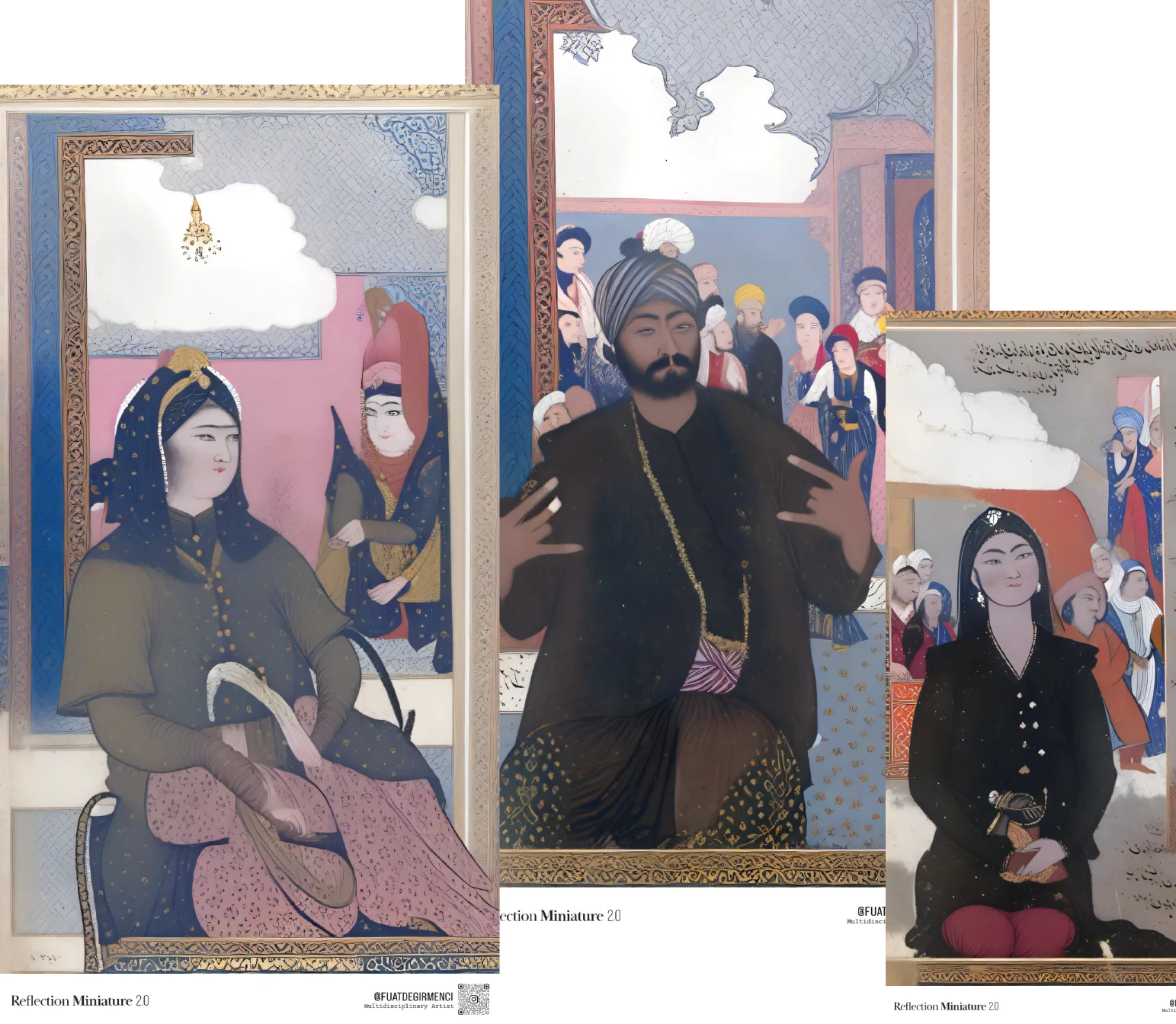
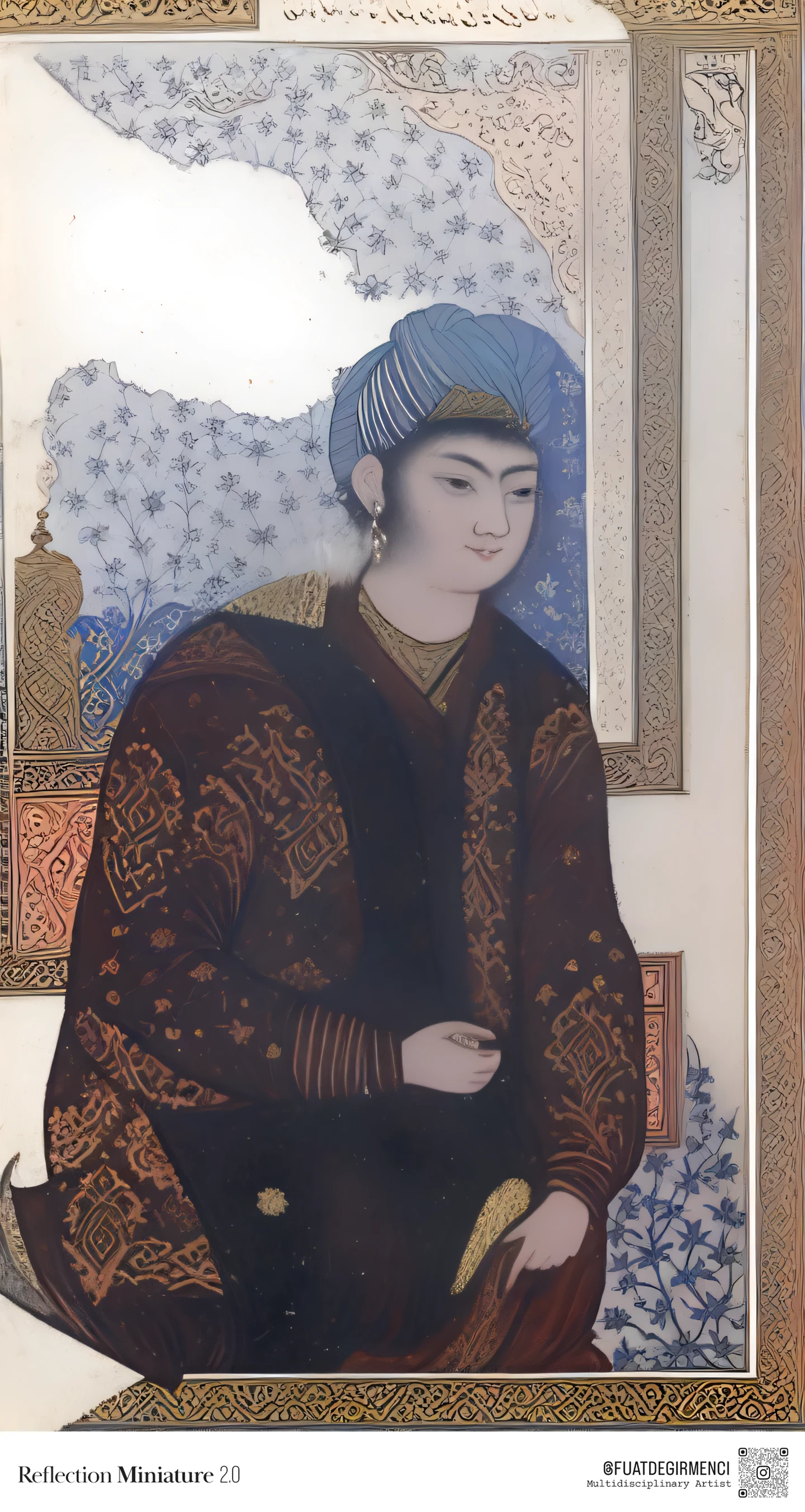
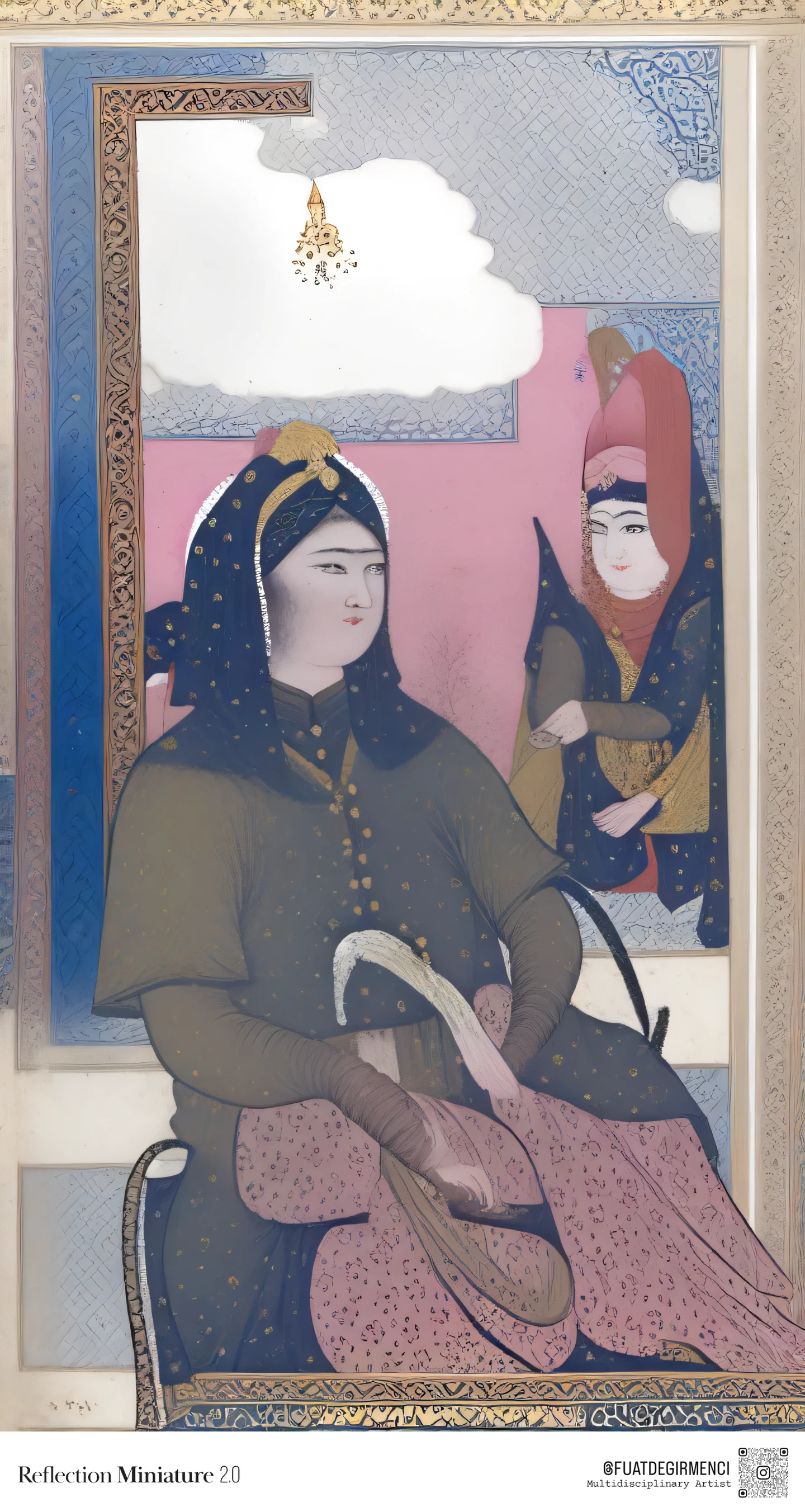
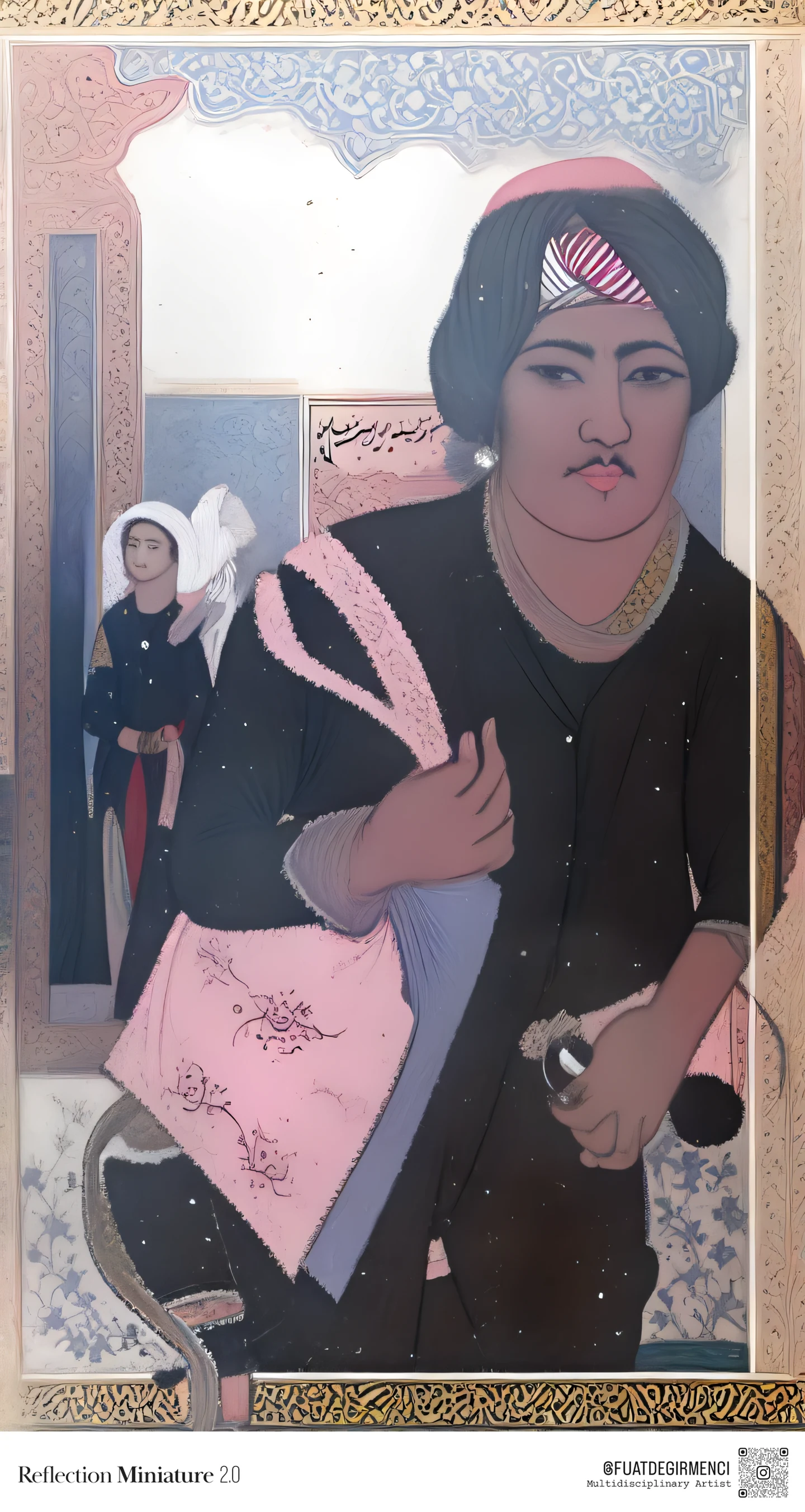
Reflection Miniature 2.0
In parallel with Reflection Renaissance 2.0, the project was also developed through the visual language of miniature painting. Historically, miniature art does not rely on linear perspective or realistic proportions. Instead, it constructs meaning through symbolic scale, flattened space, and narrative density. Figures, objects, and events coexist within the same surface, freed from the constraints of optical realism. The miniature versions translate the logic of algorithmic transformation into a pictorial language rooted in cultural memory. Here, digital distortion finds an equivalent in historical abstraction; the algorithm’s reconfiguration of the body resonates with the miniature’s disregard for physical accuracy. This parallel production expands the project beyond a single medium. While the real-time installation allows the body to be continuously rewritten through interaction, the miniature works offer a condensed, reflective space—where transformation is frozen into narrative form.